How EMRs Protect Patient Records from Theft and Alterations
Patient records contain confidential information, including diagnoses, prescriptions, insurance information, and personal history. All of this information can be at risk.
The numbers show the risk clearly. In 2024, healthcare breaches exposed about 275 million patient records, which is 63.5% more than in 2023, according to HIPAA Journal. Each breach costs an average breach now costs $9.8 million, the highest among all industries for 14 consecutive years.
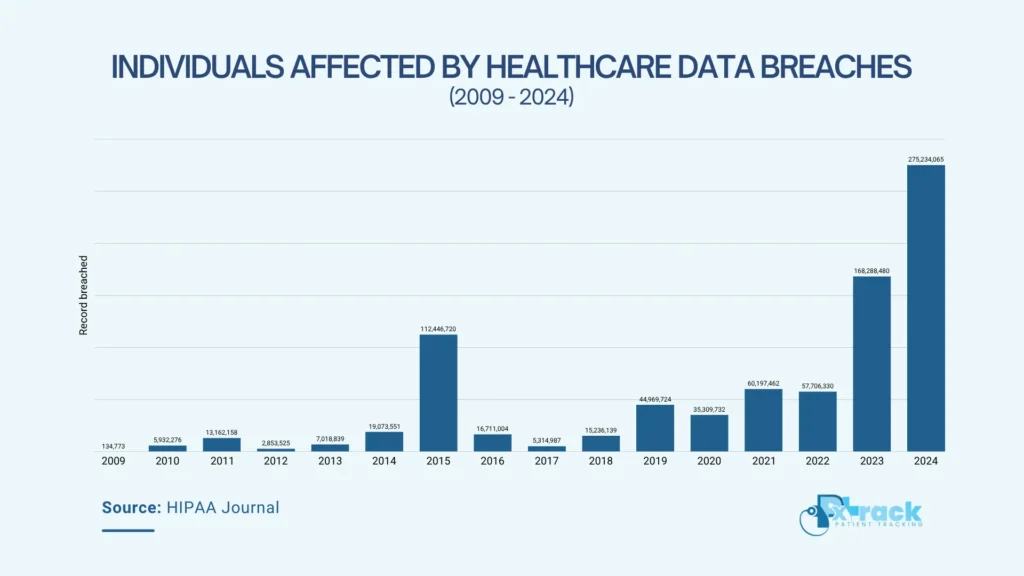
Source: HIPAA Journal.
Paper records make these risks worse. Physical charts can be accessed, copied, or destroyed without anyone noticing. If someone changes a record, it is often impossible to tell what was changed or who did it.
Electronic Medical Records (EMRs) give clinics and doctors much more control. Every access is recorded, and storage is encrypted. If something happens, there is a record to follow up on.
How EMRs Protect Patient Records from Theft
A properly set up EMR uses several security layers. Each one helps reduce the risk of unauthorized access to patient data.
Secure Login and Authentication
Each user must log in with their own credentials. Many systems also use two-factor authentication. This makes it harder to share or guess an account without a verification step.
Encrypted Storage
Data is encrypted both when sent and when stored. Without the decryption key, any stolen information cannot be read. Cloud-based EMRs also help prevent physical theft, since stolen devices do not reveal records the way a stolen filing cabinet would.
Role-based Access Controls
Administrators decide what each user can see, edit, or download based on their job. For example, receptionists might see schedules and billing coordinators might view invoices, but neither needs access to clinical notes. This setup limits data exposure if an account is compromised.
All these controls work together to limit the number of people who can access confidential patient data at any time.
Preventing Unauthorized Edits and Changes
Preventing unauthorized access is just one part of the solution. Clinics also need to track when records are changed and who made the changes.
Audit trails keep a record of every action.
Every time someone opens, edits, downloads, or prints a record, the system records who did it and when. Without these logs, unauthorized changes might go unnoticed and unaddressed, as a 2024 study on PubMed Central points out.
By regularly checking these logs, clinics can spot unusual patterns, such as someone repeatedly accessing records outside their department.
Permission settings separate viewing from editing.
Not everyone who can read a record should be able to change it. For example, a nurse might view a patient’s chart, but only the assigned doctor should update clinical notes. This separation helps prevent mistakes and makes it harder to hide tampering.
Version history makes tampering visible.
Digital records keep earlier versions of each document. If something changes, you can recover and compare older versions to spot any differences. With paper records, changes or erased notes might go unnoticed.
Because of these benefits, audit trails are now required by HIPAA’s Security Rule for all covered healthcare organizations, and by many national privacy laws.
Benefits of Secure EMRs for Clinics and Patients
Using a secure EMR not only lowers risk but also improves daily clinic operations.
Patient trust
Patients expect their health information to stay secure and private. If a clinic has a breach or mishandles records, it can quickly lose trust. Secure, audited systems show that the clinic manages data responsibly.
Faster record access
Authorized staff can pull up a patient’s full history in seconds. There is no need to search through paper files, find lost charts, or wait for records to move between departments.
Regulatory compliance
The Data Privacy Act of 2012 requires healthcare providers in the Philippines to protect personal information and limit access to authorized staff. EMRs with built-in controls and audit logs make it easier to stay compliant and provide evidence during regulatory audits.

Safer Healthcare Starts with Secure Digital Records
EMRs give clinics a more reliable way to manage patient records. Encrypted storage, controlled access, and audit logs help address the problems associated with paper records. Clinics using EMRs are better able to prevent breaches, respond quickly, and meet privacy rules.
If your clinic wants to move to a more secure system, PxTrack has EMR tools made for Philippine healthcare providers. You can book a free demo to see how it can help your practice.

Frequently Asked Questions
How do EMRs prevent unauthorized access?
EMRs need each user to have their own login, and often use two-factor authentication. Role-based permissions control what each person can see or change. Even staff in the same clinic cannot access records outside their assigned duties.
Can an EMR track who edited a patient record?
Yes. Audit trails record every action, including who accessed a record, what was changed, and when. This makes every update accountable and helps spot and investigate unauthorized edits.
Do EMRs support compliance under Philippine law?
Yes. The Data Privacy Act of 2012 requires healthcare providers to protect personal information and limit access to authorized personnel. EMRs with audit logs, access controls, and encryption help meet these requirements.