How EMRs Strengthen Dengue Season Public Health Response
Electronic medical records strengthen the dengue response by accelerating case identification, centralizing patient tracking, and feeding real-time case data to healthcare organizations. This combination helps clinics and health units respond to outbreaks within days rather than weeks.
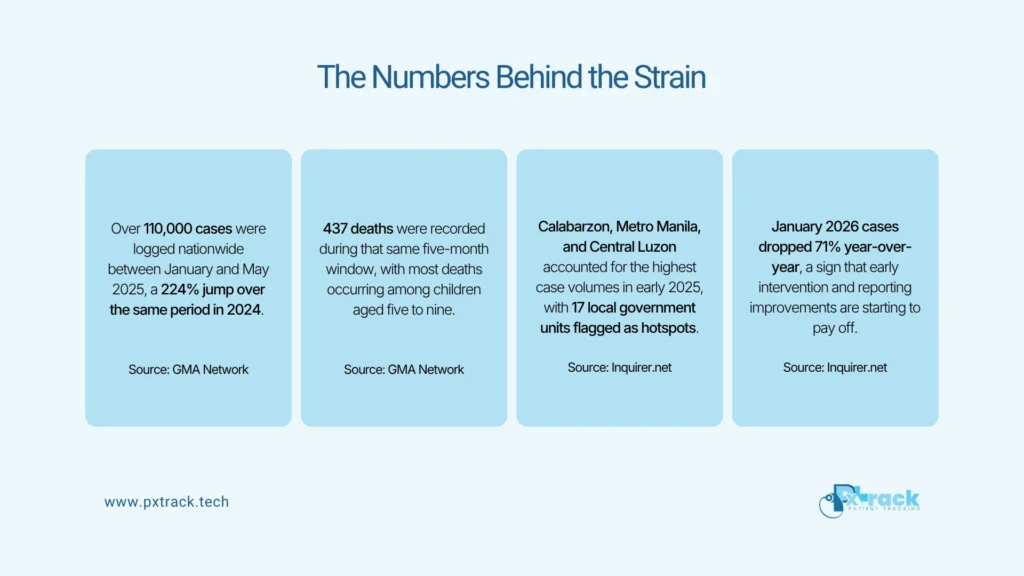
Dengue season tests the Philippine healthcare system every year. Clinics see a sharp rise in walk-ins, hospitals manage limited bed capacity, and health units scramble to track outbreak clusters. In fact, the DOH recorded 7,471 cases during the first three weeks of January 2026 alone.
However, manual processes make things more difficult. Using paper charts slows down documentation, delays reporting to health authorities, and increases the risk of losing track of patients between visits.
Using an EMR system lets clinicians document symptoms more quickly, flag potential cases, and share information with local health units. For clinics and medical practitioners, the dengue season often shows just how valuable electronic medical records can be.
Why Dengue Season Strains the Philippine Healthcare System
Dengue is endemic across all regions of the Philippines, and outbreaks intensify during the wet season. Recent years show why digital systems are important.
Sources: GMA Network, Inquirer.net
Faster Case Identification and Reporting
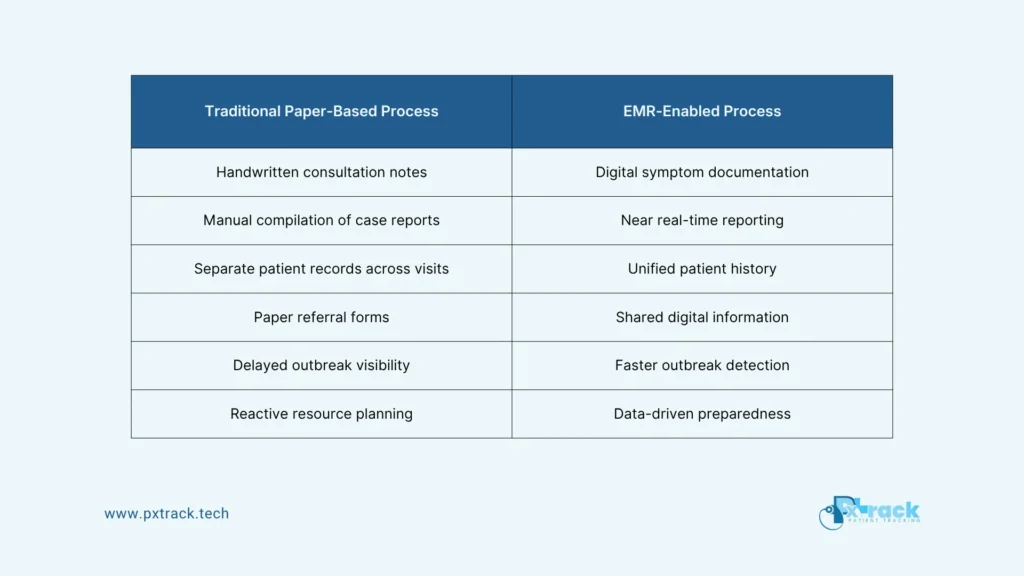
Speed is crucial in the first 48 hours of a suspected dengue case. A patient with fever, rash, and joint pain needs their symptoms recorded right away, not after a nurse copies handwritten notes at the end of a shift.
Symptom Documentation at the Point of Care
EMRs allow doctors to document dengue-specific symptoms directly during consultations. Built-in templates or symptom checklists prompt the right questions and capture the right data points from the first encounter. This matters because dengue can escalate quickly, and early documentation supports earlier intervention.
From Manual Reporting to Near Real-Time Surveillance
Automated records also solve a big problem: manual reporting to health authorities. Instead of adding up cases at the end of the week, a digital system can send data to local health units almost instantly through the Philippine Integrated Disease Surveillance and Response (PIDSR) system.
The PIDSR is the Department of Health’s national system for tracking and responding to infectious disease outbreaks. It changes disease surveillance from a slow, batch process to more real-time monitoring.
For public health teams, this speed means they can spot spikes in cases sooner. A group of dengue cases in one barangay can be detected within days rather than weeks, giving health officers time to act before the outbreak spreads.
Here’s a quick comparison:
Improved Patient Tracking During Outbreaks
Dengue patients need close monitoring, especially during the critical phase when plasma leakage and platelet counts can drop. But a single consultation rarely tells the full story.
Centralizing Lab Results and Warning Signs
EMRs keep all this information in one place. A patient’s CBC trends, platelet counts, and hydration status are stored in a single record rather than spread across multiple paper charts. Doctors can quickly check a patient’s history and see if platelet counts are dropping or if warning signs are appearing.
Why This Matters During Surges
Clinics may see dozens of patients with similar symptoms in one day. Busy times make it more likely that a patient will miss follow-up, especially if their condition gets worse between visits. An EMR reduces this risk by incorporating follow-up scheduling, lab result tracking, and warning-sign documentation into the same system clinicians use every day.
Better Coordination Between Healthcare Providers
Managing dengue often involves several providers. A patient might begin at a barangay health center, get lab tests at a clinic, and go to the hospital if their condition gets worse. Each step is a chance for information to be lost.
Faster Referrals for Severe Cases
Some EMR providers now include referral workflows in their systems because dengue care often occurs across multiple facilities. Shared digital records help by giving every provider access to the same patient history.
When a hospital receives a referral for severe dengue, it does not have to start from scratch. The doctor can quickly review past consultations, lab results, and treatment notes, which saves time between referral and intervention.
This coordination is especially important when a patient transitions from outpatient care to hospital admission. Severe dengue can worsen quickly, and delays due to missing information can affect the outcome.
Coordinated Response Across Care Levels
Digital connectivity does more than help individual patients. It also supports a more coordinated response to outbreaks. Clinics, labs, and hospitals that use shared data can agree more quickly on how to manage cases and which resources are needed.
Data-Driven Public Health Decision-Making
Individual patient records are important, but combined data shapes public health strategy. When clinics in a region use electronic medical records, health authorities get a much clearer view of how dengue is spreading.
Spotting Hotspots Before They Widen
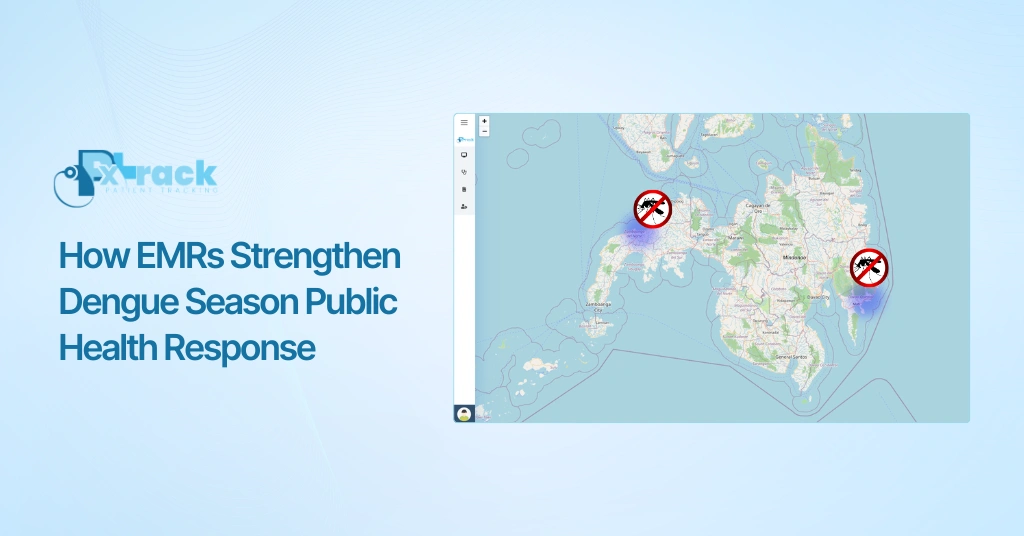
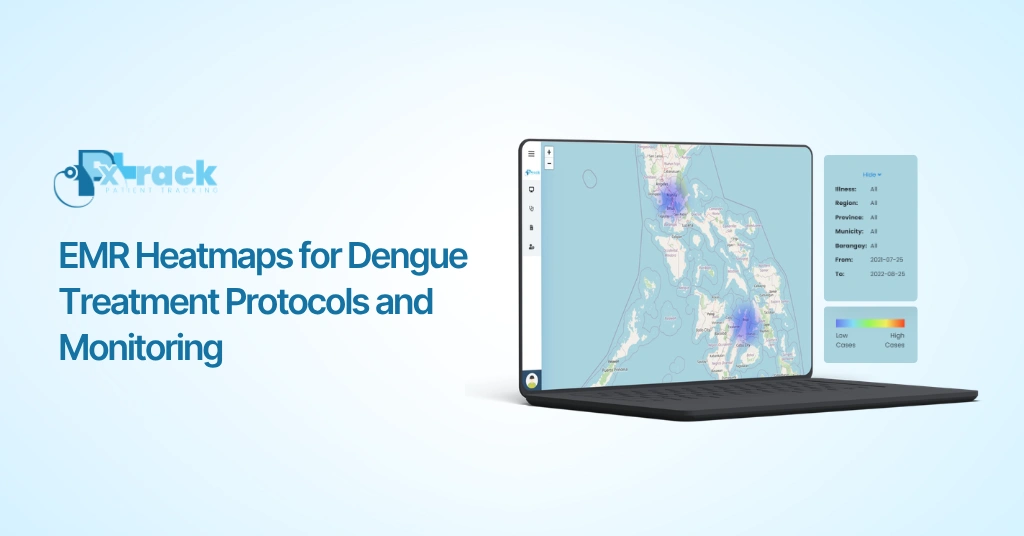
When EMR data is reported regularly, it can show outbreak hotspots before hospital admissions make them clear. Patterns such as where cases cluster, which age groups are affected, and when symptoms become visible. This helps target interventions, such as fogging or awareness campaigns, to specific barangays rather than entire cities.
The benefits go beyond single clinics. When clinics share timely case data, local health units get a clearer view of how dengue spreads in the community. These insights help regional and national teams spot outbreaks sooner and coordinate responses more effectively.
Smarter Resource Allocation
Resource allocation also gets better. Health authorities can predict where more hospital beds, blood products, or staff are needed by looking at real-world case trends rather than guesses. This helps make public health planning proactive rather than reactive.
Building Preparedness Through Historical Data
Historical EMR data adds even more value. Data from several years help health authorities see seasonal patterns, predict when future outbreaks might occur, and prepare resources in advance. Over the years, this has created a stronger public health system that is ready for the dengue season instead of scrambling.
Conclusion
Dengue season always puts a steady strain on the Philippine healthcare system. Clinics get overcrowded, health authorities deal with reporting delays, and patients risk being overlooked during recovery.
Electronic medical records help solve these problems. They make it faster to identify cases, improve patient tracking, connect providers, and give public health authorities the data they need to plan ahead. For clinics in the Philippines, the dengue season is one of the best examples of why this technology matters.
EMRs are more than just a convenience for clinics. During outbreaks, they become a key part of the public health system. As dengue season continues to challenge healthcare providers, using an EMR in the Philippines can improve patient tracking, streamline reporting, and enable faster responses to outbreaks. PxTrack helps clinics connect daily patient care with larger public health efforts.

Frequently Asked Questions
How do EMRs help detect dengue outbreaks faster?
Some EMRs allow clinicians to document symptoms at the point of care and automatically transmit that data to health authorities. This replaces manual end-of-week reporting with near real-time visibility into case spikes.
Can EMRs track dengue warning signs, such as platelet drops?
Yes. EMRs centralize a patient’s CBC trends, platelet counts, and hydration status in one record. Clinicians can review this history in seconds instead of searching through separate paper charts.
How do EMRs support referrals during severe dengue cases?
Shared digital records give the receiving physician immediate access to a patient’s prior consultations and lab trends. This shortens the time between referral and treatment, which matters when severe dengue progresses quickly.
What role do EMRs play in public health planning?
Aggregated EMR data reveal geographic clustering, age-group trends, and seasonal patterns. Health authorities use this data to allocate resources, plan vector control efforts, and prepare for future waves of outbreaks.
Are EMRs only useful for large hospitals during dengue season?
No. Smaller clinics benefit as much as hospitals, since early documentation and faster reporting at the clinic level feed directly into regional and national surveillance systems.