How EMR for Oncology Simplifies Cancer Treatment Tracking
An EMR for oncology simplifies cancer treatment tracking by centralizing all aspects of a patient’s care on a single, user-friendly, secure and accessible platform. Chemotherapy cycles, lab results, imaging studies, and multidisciplinary notes are all organized in one place, giving physicians a complete, real-time view of each patient’s treatment journey.
Managing cancer care in a small practice is no small feat. The complexity of tracking chemotherapy regimens, radiation schedules, immunotherapy cycles, and supportive care can quickly become overwhelming. Unlike large hospital systems with dedicated resources, solo practices often rely on limited staff and manual processes to coordinate multidisciplinary care.
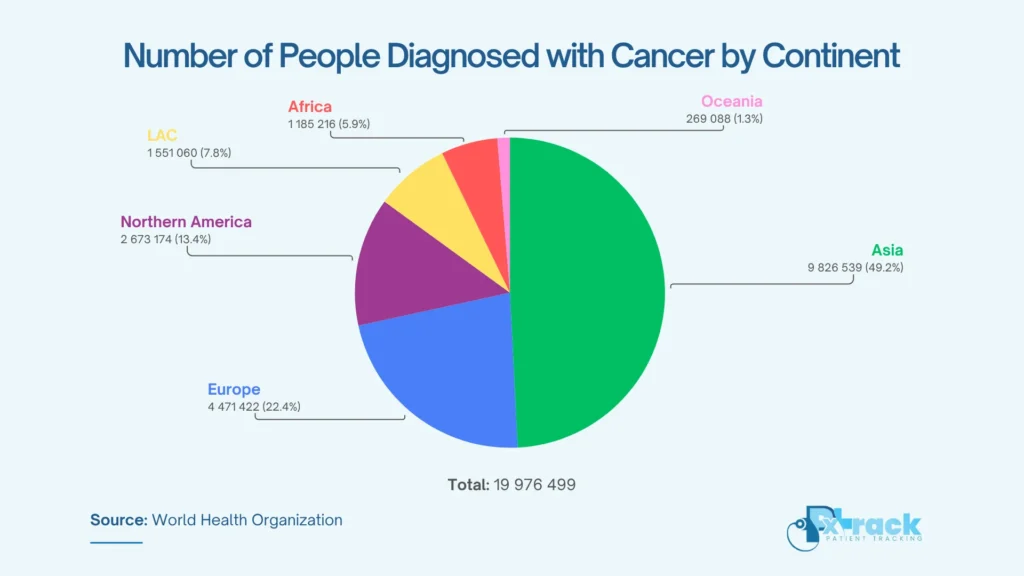
Source: World Health Organization.
Why Traditional Systems Fail in Oncology Care
According to the World Health Organization, more than 19 million people worldwide were diagnosed with cancer in 2025. This reality demands into managing a growing patient population where precision, coordination, and timely access to data are essential. Yet many practitioners still rely on workflows that were not designed for the complexity of modern oncology care.
Paper charts and spreadsheets come with significant risks. Records can be misplaced, damaged, or simply lost in a stack on a desk. When a cancer patient arrives for a chemotherapy appointment, locating the most recent lab results or the exact dosing history should no longer require searching through filing cabinets.
Disconnected communication is another major hurdle. A solo practitioner may coordinate with a radiation oncologist, a surgeon, and a cardiologist—all using different systems or none at all. Critical updates get delayed, missed appointments, and treatment plans can fall through the cracks.
Patient safety is at stake. Errors in tracking chemotherapy doses, missing abnormal lab values, or losing sight of a patient’s cumulative treatment history can compromise safety and therapeutic efficacy. For individual practitioners, even one such error can have devastating consequences for the patient and the practice alike.
How EMR for Oncology Improves Treatment Tracking
An EMR for oncology addresses these challenges head-on by bringing everything into a single, user-friendly,and secure system.
Centralized Patient Records
Every chemotherapy cycle, lab result, imaging study, and supportive care note is recorded in a centralized cloud-based system. When a patient walks in, the entire treatment history from their previous checkups with you is available instantly, so there’s no more chasing down records or relying on memory.
Built-In Clinical Safeguards
Implementing EMRs for oncology enables physicians to determine abnormal lab results, potential drug interactions, or missed treatments. This acts as a second set of eyes, helping solo practitioners catch issues before they become problems.
Real-Time Care Coordination
Even in a small practice, oncology care is rarely delivered in isolation. Whether coordinating with external specialists or managing a small internal team, an EMR ensures that authorized users have access to the same up-to-date information in real time. This reduces repetitive or back and forth communication, eliminates duplicate work, and keeps the focus on the patient.
Learn more about the time-saving benefits of EMRs for clinical workflows.
EMR for Oncology: Benefits for Physicians and Patients
For physicians, having a comprehensive view of each patient’s cancer treatment journey enables more informed decision-making. When every lab trend, imaging comparison, and treatment response is visible in one place, adjustments to therapy can be made with confidence and speed.
For patients, the experience becomes safer and more seamless. Fewer delays, reduced risk of errors, and smoother navigation through complex treatment protocols mean patients can focus on healing rather than managing logistics.
In practice, workflows become more efficient. Administrative burdens decrease as staff spend less time on manual data entry and follow-up calls, allowing physicians to focus more on patient care and treatment planning. For solo practitioners or small clinics, this efficiency translates directly to a more sustainable practice.
Conclusion: Why EMRs Are Essential in Oncology Care
Cancer treatment is too complex to manage with paper charts or disconnected tools. Having an oncology-specific EMR is not just a technological upgrade; it is a foundation for safer, more reliable patient care.
EMRs reduce errors, improve management of chemotherapy, radiation, and surgical treatments, and ensure every step of the oncology care plan is documented. By centralizing information and facilitating communication among all members of a patient’s care team, they enhance collaboration even when specialists are outside the practice.
Adopting an EMR for oncology in a small practice improves safety, accuracy, patient outcomes, and efficiency. For solo practitioners, it becomes essential to deliver reliable, high-quality cancer care at scale.
Simplify cancer treatment tracking with PxTrack and see how an EMR for oncology is built to support precise, coordinated care in modern clinical settings.

Frequently Asked Questions
Is an oncology EMR worth the investment for a solo practitioner?
Absolutely. While the upfront cost may seem significant, the time saved on administrative tasks, reduced risk of medication errors, and improved patient outcomes make it a sound investment.
Solo practitioners often find that an EMR for oncology pays for itself through increased efficiency, fewer billing issues, and the ability to manage a larger patient panel without adding administrative staff.
How difficult is it to transition from paper charts or spreadsheets to an EMR?
Transitioning does require planning, but modern oncology EMRs are designed with user-friendly interfaces and offer dedicated onboarding support. Most vendors, including PxTrack, provide data migration assistance, training sessions, and ongoing customer support to ensure a smooth transition.
For small practices, the switch often takes a few weeks, with immediate improvements in organization and workflow efficiency.
How much does an EMR for oncology typically cost?
Pricing for oncology EMRs varies based on factors such as practice size, number of providers, and specific features needed. Most vendors offer subscription-based models, with costs ranging from a few hundred to several thousand dollars per provider per month.
For solo practitioners and small clinics, many EMR providers, including PxTrack, offer scalable pricing plans designed to fit smaller budgets without sacrificing essential oncology-specific features. Check our pricing here.