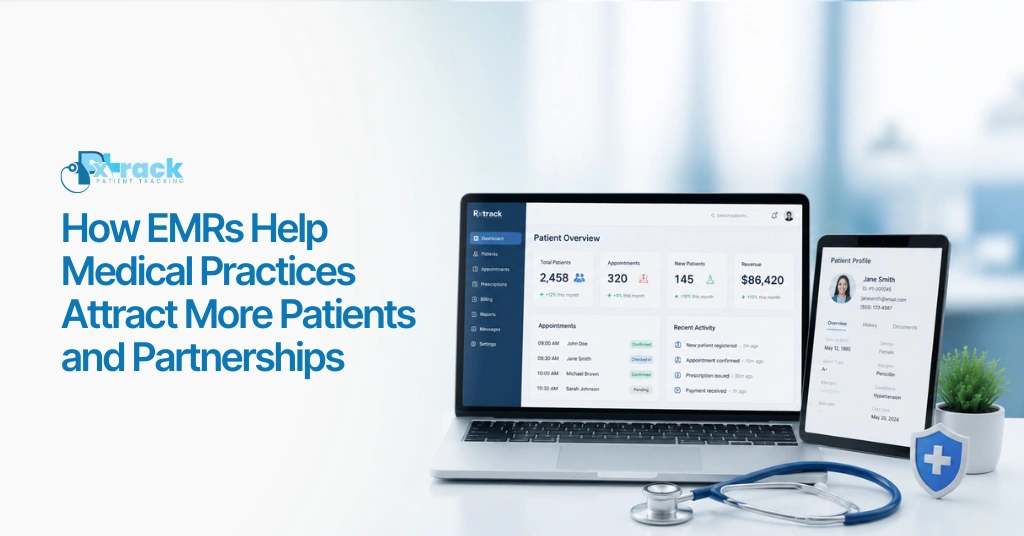
How EMRs Help Medical Practices Attract More Patients and Partnerships
Healthcare is moving toward digital solutions, and patients now expect care that is convenient, efficient, and uses the latest technology. Practices that use Electronic Medical Record (EMR) systems show they are modern, reliable, and focused on patients in a competitive market.
This shift first changes how patients experience care, then helps build trust in the clinic, and over time leads to stronger partnerships.
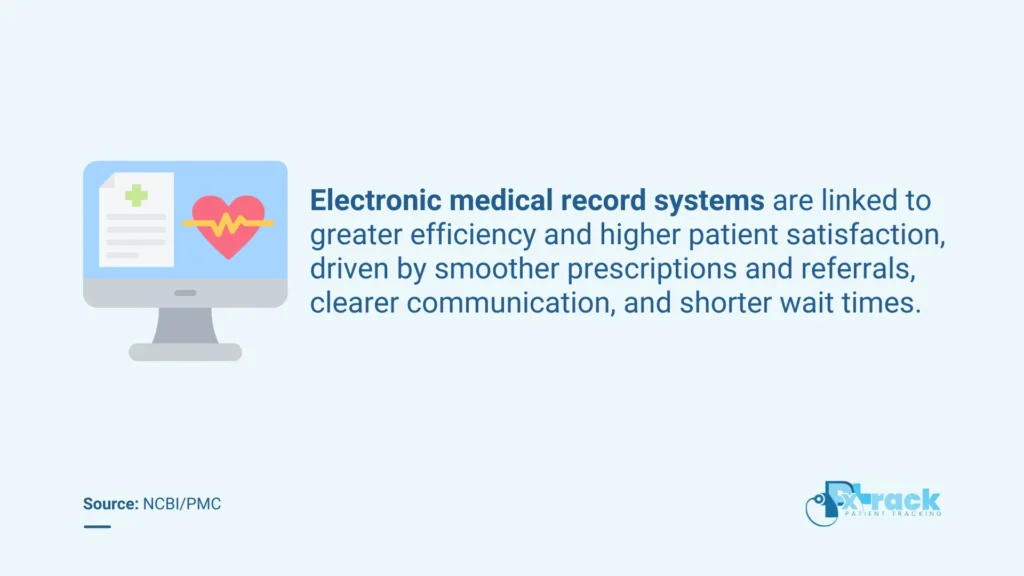
— Systematic Review on Electronic Health Services and Patient Satisfaction in Primary Care, NCBI/PMC
Key Takeaways
- EMR speeds up registration, check-in, and booking appointments, giving patients a better first impression of the clinic.
- Secure patient portals give medical practitioners and authorized staff direct access to lab results, visit summaries, and prescriptions, building trust and engagement.
- Using reliable EMR systems leads to clear improvements in patient experience scores, including overall care ratings.
- Quick access to full medical histories helps doctors make safer and more accurate decisions.
- EMR systems make it easier and faster to share data with labs, specialists, and networks, which helps clinics become better partners.
- A digital-first clinic shows hospitals, payers, and referral partners that it is innovative and well-organized.
Enhancing the Patient Experience
Today, patients want the same digital convenience from healthcare that they get from banks, stores, and travel companies. Clinics with EMR make registration and booking appointments faster, so patients spend less time on forms in the waiting room. Front desk staff can quickly find patient details, which speeds up check-in and lets doctors focus more on care instead of paperwork.
EMR platforms allow doctors and authorized personnel to view their medical records through secure online portals. They can check lab results, visit summaries, and prescriptions from their phone or computer. This access helps patients take charge of their health. When patients can easily see their care, they trust the clinic more and stay involved in their treatment.
In addition, EMR systems make communication more reliable. Some EMRs have automated reminders, follow-up messages, and digital updates that keep patients informed throughout their care. Clinics that stay in touch this way often see patients return, because people like providers who make the experience easy.
Building Trust Through Efficient and Accurate Care
Trust grows when a clinic runs smoothly, and electronic medical record systems help make that happen. Digital records reduce paperwork, so staff can spend more time caring for patients instead of sorting through files.
A peer-reviewed EHR adoption study found positive associations between certified EHR adoption and multiple patient experience measures, including overall hospital ratings and discharge information quality.
Quick access to a patient’s full medical history helps doctors make better decisions. They can check allergies, medications, and past diagnoses right away, which leads to safer prescriptions and better treatment plans. This speed is especially important in emergencies, when having the right information quickly can make a big difference.
EMR also helps keep care consistent. When patients see different doctors or visit labs, their information stays the same at every step. This helps avoid repeated tests, prevents mixed-up treatment plans, and gives all providers a complete view of the patient’s health.
Creating More Partnership Opportunities
A digital-first foundation opens doors that paper-based practices often struggle to reach. Clinics running modern EMR systems collaborate more easily with laboratories, specialists, and broader healthcare networks, since their systems already speak the same digital language.
This compatibility matters more each year, as the 2026 Interoperability Standards Advisory promotes HL7 FHIR as the backbone for secure, standards-based data exchange across the industry.
Data sharing and reporting become much easier once a clinic adopts EMR. Referrals move faster, lab results sync automatically, and administrative reporting takes much less time. Health systems and payers now prefer partners who can exchange information smoothly, giving digital clinics a real advantage when new opportunities come up.
Beyond technical benefits, a digital-first clinic signals to potential partners that it is innovative and well-run. Hospital networks, insurance groups, and referral partners look for providers who can scale, adapt, and work with modern healthcare systems.
A recent 2026 health IT predictions report showed that investing in patient enablement and stronger data-sharing partnerships is becoming key for provider growth. Clinics that meet this standard stand out as forward-thinking partners, not as outdated operations trying to catch up.
Conclusion
Medical practices that use electronic medical record systems are ready to meet today’s patient expectations and can run more efficiently. Faster appointment booking, easy access to records, robust security, and clear communication make patients more likely to return and recommend the clinic. Providing accurate and efficient care helps build trust and turns new patients into loyal ones.
These benefits go beyond the exam room. They include easier data sharing, better teamwork with labs and specialists, and show that the clinic is innovative. All of this makes a digital-first clinic more attractive to healthcare partners. By improving patient experiences and making collaboration easier, EMR helps clinics attract new patients and build partnerships that support long-term growth.
Modernize your clinic with PxTrack and see how its EMR solutions can help your practice grow and succeed.

Frequently Asked Questions
What makes a medical practice “digital-first”?
A digital-first clinic uses digital systems like EMR for records, scheduling, and communication, instead of relying on paper.
How does EMR improve the patient experience?
EMR makes registration and check-in faster and lets patients access their records through a portal. Automated reminders help keep patients informed and involved in their care.
Does EMR adoption actually affect patient trust and satisfaction?
Yes. A peer-reviewed study found that using certified EHR systems is linked to better patient experience scores, including overall care ratings and the quality of discharge information.