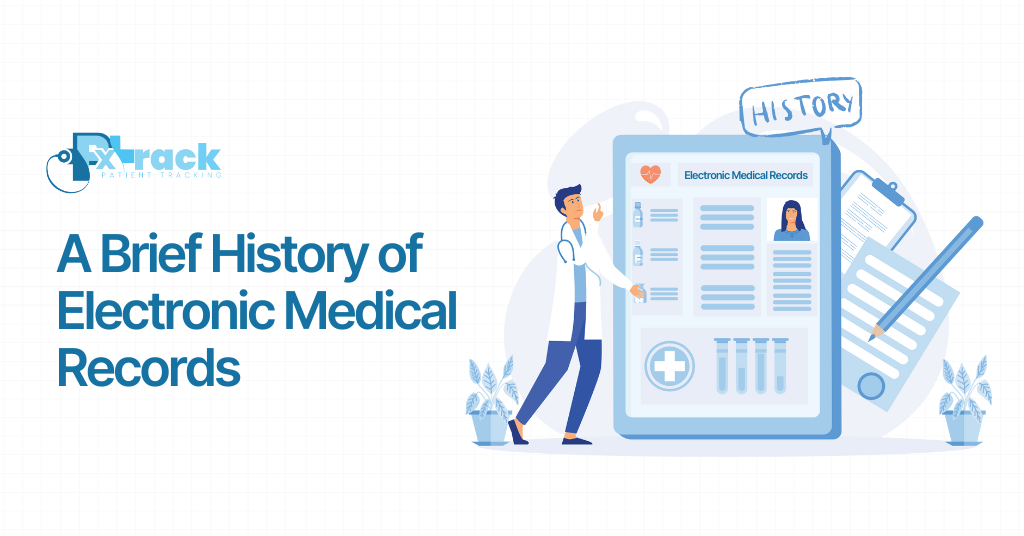
A Brief History of Electronic Medical Records
As technology advances, the healthcare industry is transforming, delivering faster, smarter, and more patient-centered care. A key driver of this change is the electronic medical records (EMR) system, replacing paper charts with digital tools to streamline workflows, reduce errors, and enhance the experience for both providers and patients.
To understand how EMRs became a vital part of modern healthcare, it helps to look back at how they began and how far they’ve come.
History of the Electronic Medical Records (EMRs)
The healthcare industry has continually evolved, updating its regulations, workflows, and tools to deliver better care. Among the most impactful innovations is the EMR system, which reshaped how patient information is captured, stored, and used.
What began as a simple digital alternative to paper charts has become a cornerstone of modern healthcare. Below is a brief look at the origins of EMRs and the pioneers who helped bring them to life.
Ancient Roots
Medical records have been evolving throughout history. The earliest known medical records date back to Hippocrates in the 5th century BCE, marking the start of a long tradition of documenting patient care.
By the 19th century, formal medical records emerged in European teaching institutions and soon spread globally. Then, in the 20th century, medical practitioners developed the modern medical record, standardized, systematically organized, and stored for ongoing care.
However, these medical records were manually written on paper. This led to persistent challenges, such as the following:
- Inconsistent formats across providers and facilities;
- Difficulty locating specific information, and
- Frequent data loss due to damage, misfiling, or poor storage.
Dr. Lawrence Weed
Dr. Lawrence Weed conceptualized the idea behind EMR in the late 1960s. An American physician and educator, Weed was then a professor of medicine and pharmacology at Yale. While observing his students, he noticed how they struggled to interpret doctors’ often indecipherable handwritten notes.
This inspired him to propose a new approach: an electronic medical record designed not just to store data but to support clinical reasoning. His vision was to create a structured, electronic patient record that would allow third parties to objectively assess a physician’s diagnosis and reasoning.
He called this framework the Problem-oriented Medical Record (POMR), which later became the foundation for digital systems. Building on POMR, Weed developed PROMIS (Problem-Oriented Medical Information System), one of the earliest true EMRs.
In 1969, PROMIS featured an interactive touchscreen interface and was widely regarded as a pioneering EMR system. He later founded the company called PKC to advance clinical information management systems. It was acquired by Sharecare, a digital health company, in 2012.
Weed, widely hailed as the father of the modern EMR, passed away on June 3, 2017, at the age of 93.
The Regenstreif Institute
The Regenstreif Institute, a research organization based in Indiana, USA, developed one of the first electronic medical record systems in 1972. This marked a major milestone in healthcare technology.
However, the system’s high cost and technical demands meant it was used almost exclusively by government hospitals. By the 1990s, falling computer costs and the rise of the internet made digital systems far more attainable for clinics and private practices.
In the early 2000s, the former US President George W. Bush’s administration significantly increased funding for healthcare IT and championed industry-wide EMR adoption. This sets the stage for the digital transformation of U.S. healthcare.
American Recovery and Reinvestment Act of 2009
In 2009, former US President Barack Obama further pushed and supported Bush’s mandate by enacting the American Recovery and Reinvestment Act (ARRA).
Its key component was the Health Information Technology for Economic and Clinical Health (HITECH) Act, which offered financial incentives to healthcare professionals who adopt EMR systems in their operations.
This surge in incentives sparked rapid innovation, fueling the development and adoption of EMR platforms across the U.S. and beyond.
Adopt EMR in your Medical Facility’s Operations
Today’s electronic medical records do more than replace paper; they enhance accuracy, save time, improve patient care, and support smarter clinical decisions. For medical practices looking to modernize, an EMR is a strategic step toward efficiency, compliance, and better outcomes.
In the Philippines, more providers are turning to locally built, cloud-based EMR solutions that understand the realities of local practice. This includes intermittent connectivity, diverse staffing levels, and the need for intuitive design.
Such systems are helping doctors spend less time on paperwork and more time with patients, without compromising security or compliance. Modernize your practice and explore trusted electronic medical records in the Philippines, like PxTrack, designed with local care teams in mind.

This article was updated on November 05, 2025.
FAQs About Electronic Medical Records
What’s the difference between an EMR and an EHR?
An EMR (Electronic Medical Record) is a digital version of a patient’s chart used within a single clinic or practice. An EHR (Electronic Health Record) is designed to share information across different healthcare providers and settings. For most small to mid-sized clinics in the Philippines, an EMR is the practical starting point.
Is it difficult to switch from paper records to an EMR?
Not with the right support. Modern EMR systems are built for ease of use, even for staff with limited tech experience. Many include onboarding assistance, data migration help, and training, so your team can transition smoothly without disrupting patient care.
How much does an EMR system cost?
Costs vary, but many local providers offer flexible and subscription-based pricing. This includes the number of users, updates, support, and cloud storage, with no large upfront hardware investment. Check out our pricing here.