How Electronic Medical Records Cut Clinic Operational Costs
Many doctors still use paper records despite knowing how tedious it is to manage patient data in this manner. Flipping through thick files, searching for misplaced charts, and spending hours on manual updates have become part of the daily routine. While it’s true that switching to electronic medical records (EMRs) requires a learning curve, it also offers valuable long-term benefits that many overlook.
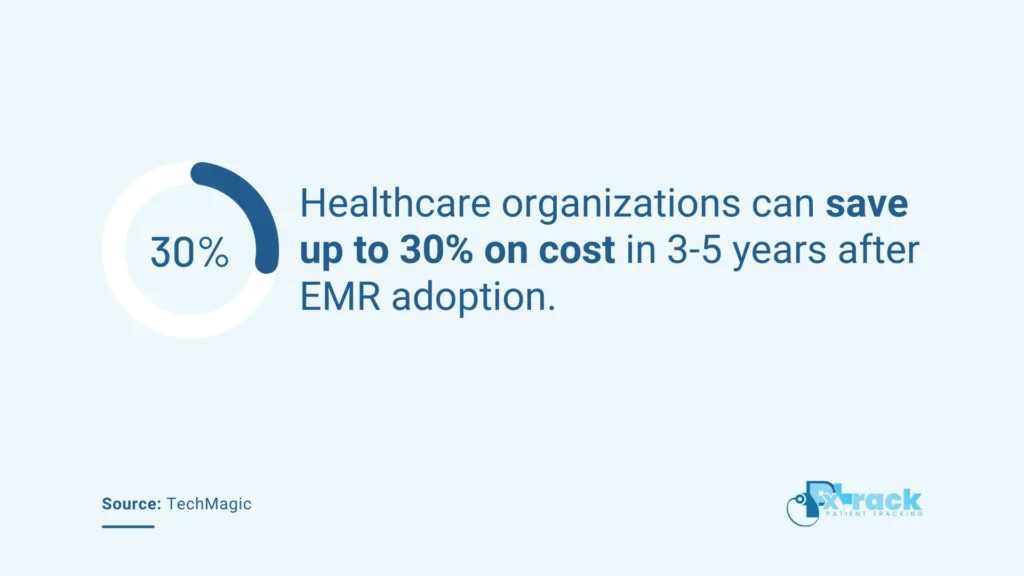
Source: TechMagic
With such significant potential for savings, it’s worth exploring how EMRs reduce operational expenses for clinics of all sizes.
Hidden Costs of Traditional Paper Records
Paper records may seem simple and even familiar, but they also come with significant and often overlooked expenses that add up quickly. In short, paper-based systems are not just outdated, they’re more expensive, inefficient, and risky.
Direct Cost: Paper, Printing, and Storage
Paper, ink, folders, and physical storage space aren’t free. Clinics spend thousands annually on printing, filing cabinets, off-site storage, and climate-controlled archives to maintain compliance and protect confidential information.
Indirect Cost: Labor-Intensive Processes
Staff spend countless hours manually entering data, retrieving physical files, and managing paperwork. This not only increases payroll costs but also diverts valuable time away from patient care.
Additionally, locating a single chart can take minutes or even hours, especially if it’s misplaced or stored offsite. These delays slow down appointments, reduce patient outputs, and frustrate both staff and patients.
Risk of Loss or Damage
Paper records are vulnerable to loss, misfiling, fire, water damage, theft, or other unforeseen events. Recovering lost data is costly and time-consuming, and breaches can lead to regulatory fines under HIPAA and other privacy laws.
How EMRs Reduce Costs and Improve Efficiency
Switching to an EMR system can transform the way a clinic operates, turning administrative bottlenecks into simplified and digitized workflows.
Here’s how:
Reduces Administrative Burden
EMRs automate routine processes such as appointment scheduling, data encoding, and payment confirmation. With built-in templates and auto-populated fields, clinicians spend less time on handwritten documentation and more time with patients.
Integrated e-prescribing eliminates handwritten prescriptions, reducing errors and saving staff time spent on phone calls and faxes to pharmacies.

Instant Access to Patient Data
With EMRs, authorized providers can access complete patient histories with a few clicks, regardless of location. This speeds up diagnosis, reduces delays in treatment, and supports continuity of care, especially in multi-provider or multi-location practices.
Real-time access also enhances coordination during emergencies or referrals, minimizing redundant tests and unnecessary hospital visits.
Eliminates Redundant Tests and Procedures
One of the biggest drivers of healthcare waste is redundant testing. When labs, imaging results, and specialist reports are stored digitally and shared across systems, providers avoid repeating expensive diagnostics.
For example, suppose a patient had a recent MRI at another facility within the same network. In that case, the result can be instantly retrieved, saving hundreds or even thousands of dollars per test.
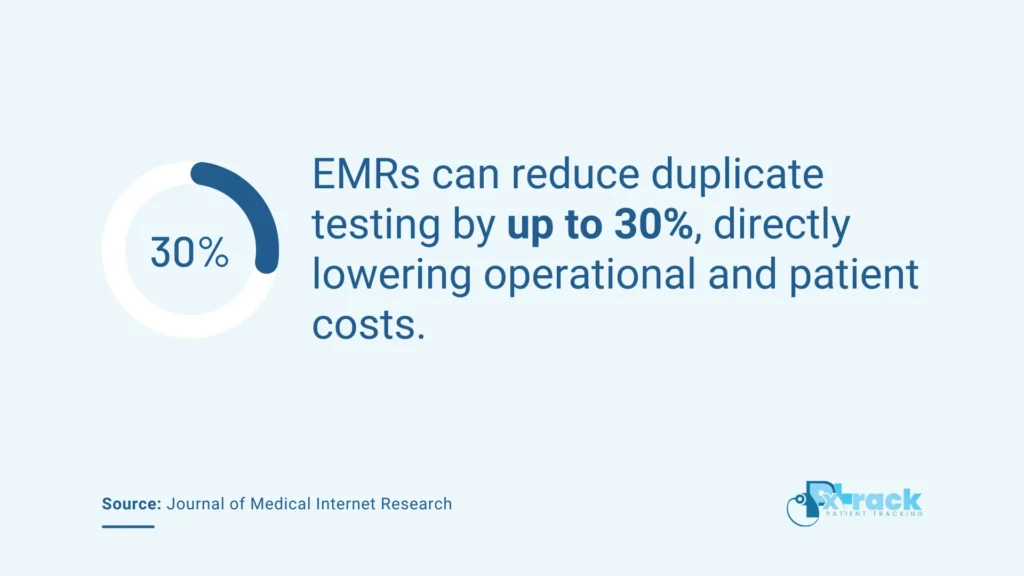
Source: Journal of Medical Internet Research
Minimizing Errors and Enhancing Patient Care
Cost savings aren’t just about cutting expenses; they’re also about preventing costly mistakes.
Fewer Medical Errors
EMRs can record potential drug interactions, allergies, and medication dosages. This helps prevent adverse events that could lead to extended hospital stays, lawsuits, or readmissions. Needless to say, all of which are expensive for clinics and harmful to patients.
Thus, accurate and legible records eliminate the risks associated with misread handwriting or incomplete charts.
Improved Care Coordination
A reliable electronic medical records system can also facilitate seamless communication between physicians and medical staff. This ensures that everyone involved in a patient’s care is also on the same page.
As a result, it reduces care gaps, improves illness management, and lowers the likelihood of complications.
Better Patient Outcomes Mean Lower Costs
When patients receive timely, accurate, and coordinated care, they experience better health outcomes. Fewer hospitalizations, reduced emergency room visits, and improved medication adherence translate into lower overall care costs.
Long-Term Financial Benefits of EMRs
While the initial investment in EMR software and training may seem overwhelming, the long-term financial benefits far outweigh the upfront costs.
Strong Return on Investment (ROI)
As mentioned, most clinics achieve a positive ROI within 1–3 years of EMR implementation. These savings come from:
- Reduced manual transcription and supply costs;
- Increased billing accuracy and faster payment collections, and
- Higher patient volume due to improved scheduling efficiency.
Scalability and Future-Proofing
EMRs grow with your practice. Whether you’re adding new providers, opening satellite offices, or integrating telehealth services, digital records make scaling easier and more cost-effective than managing expanding paper systems.
Cloud-based EMRs, PxTrack in particular, offer low infrastructure costs, automatic updates, and remote access—ideal for modern, flexible healthcare delivery.
Conclusion
Overall, the transition from paper to EMR systems is a strategic move to improve patient care, enhance work efficiency, and cut clinic operational costs. From reducing administrative burdens to preventing costly medical errors, EMRs can deliver both immediate and long-term financial benefits.
For healthcare providers looking to save more and spend less, investing in an EMR system like Pxtrack is essential. Experience firsthand how our EMR solutions can help you simplify your clinical operations and cut costs.

FAQs About Electronic Medical Records System
How much does an EMR system typically cost?
EMR costs vary based on the vendor, practice size, and features. Cloud-based systems often have lower upfront costs, with monthly subscription fees per provider. You can check our pricing here or contact our experts to learn more.
Will switching to an EMR disrupt my clinic’s daily operations?
There may be a short adjustment period during implementation, but most modern EMRs are designed for smooth transitions. Vendors typically offer training, data migration support, and onboarding assistance. Practices that plan ahead minimize disruptions and accelerate adoption by scheduling training during low-volume periods and designating internal champions.
Can small clinics or solo practitioners benefit from EMRs?
Definitely. In fact, smaller practices often see proportionally greater benefits because EMRs help them compete with larger organizations by improving efficiency, reducing overhead, and enabling participation in value-based care programs. Cloud-based EMRs like Pxtrack are especially ideal for small clinics due to low infrastructure costs and remote access.