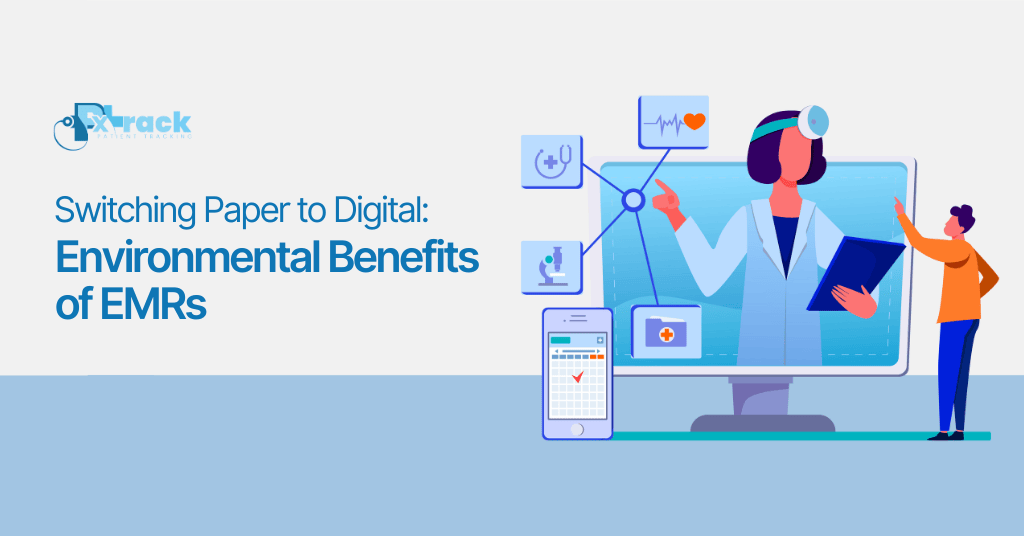
Switching Paper to Digital: Environmental Benefits of EMRs
Many healthcare facilities are now shifting from paper records to digital systems, not only for efficiency but also for sustainability as well. Going paper to digital offers tangible environmental benefits while streamlining daily operations. It provides convenience, reduces administrative burdens, and supports long-term sustainability goals for medical practitioners.
However, some private practices combine paper-based and digitized records due to workflow adjustments, staff training needs, and data migration concerns. That’s why choosing a trusted EMR (Electronic Medical Records) provider is essential. The right partner ensures smooth implementation, secured data transfer, and training support for a sustainable transition.

Why Go Digital?
Switching paper to digital in healthcare makes sense for both practical and environmental reasons. Paper records require extensive resources, including materials, storage space, and labor, to manage effectively. EMRs remove these inefficiencies, reducing clutter and streamlining how patient data is stored and accessed.
This shift also supports broader sustainability efforts. By eliminating the need for constant printing and filing, EMRs help lower paper waste, energy use, and carbon emissions. As healthcare organizations aim to modernize and reduce their environmental footprint, adopting digital systems becomes a strategic and responsible step forward.
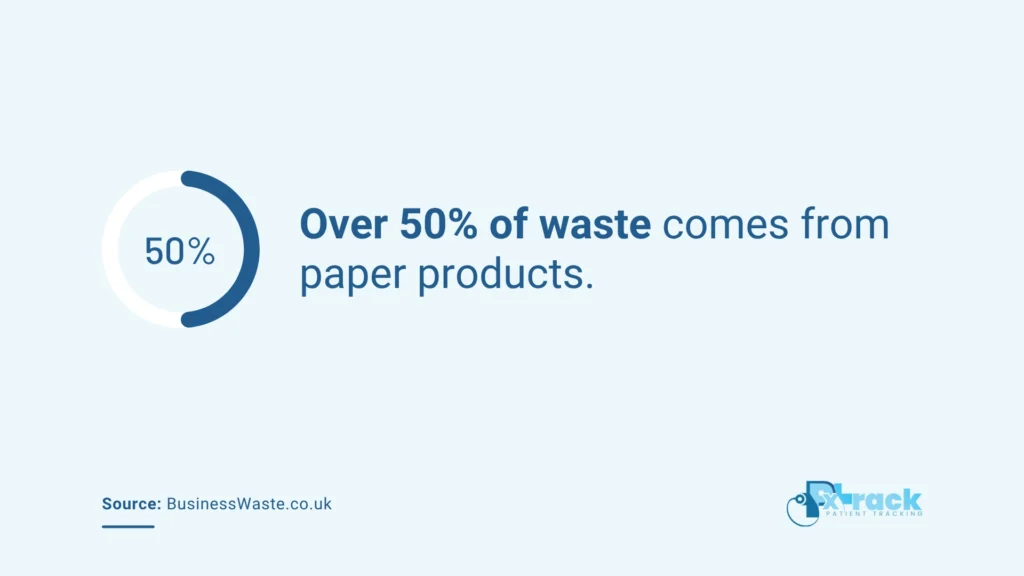
Source: BusinessWaste.co.uk
Environmental Benefits of EMRs
Besides modernizing healthcare, the EMR system also promotes greener practices in medical facilities. Here’s a closer look at how EMRs support a more eco-friendly healthcare system:
Reducing Paper Waste and Saving Energy
According to Recycling Facts, it takes 24 trees to make one ton of paper. Traditional healthcare systems that rely heavily on paper for patient records, prescriptions, billing, and administrative tasks can result in significant paper waste.
By adopting the EMR system, healthcare professionals can drastically cut down paper usage, helping preserve forests and reduce deforestation. In addition, EMRs reduce the need for printers, copiers, and physical storage, which also lowers electricity consumption.
Key environmental benefits include:
- Lower Paper Consumption: Moving to digital records cuts down massive paper consumption in healthcare. This shift reduces reliance on printed documentation and also supports broader efforts to minimize resource waste across medical operations.
- Fewer Tools and Equipment Needed: EMRs eliminate the need for printers, copiers, fax machines, and filing cabinets. This streamlines operations, frees up physical space, and reduces costs related to equipment maintenance and office supplies.
- Energy Efficiency: With fewer machines in use, healthcare facilities consume less electricity. Lower energy demand translates into reduced utility costs and a smaller carbon footprint, supporting broader sustainability goals.
Enhancing Efficiency and Productivity
When you switch from paper to digital, you’re helping the planet while improving how smoothly things run. This can lead to fewer carbon-emitting processes, aligning efficiency improvements with broader environmental sustainability goals.
By going paperless and reducing dependence on office equipment, healthcare professionals contribute to a smaller environmental footprint. Less energy use, lower material waste, and minimal emissions support a greener, more sustainable healthcare practice.
Promoting Sustainable Practices in Healthcare
Going paper to digital fits into a broader push for sustainability in healthcare. When organizations adopt EMRs, they often look at other areas where they can reduce waste and improve efficiency. That might include upgrading to energy-efficient lighting or choosing greener suppliers. Regulations and incentives also encourage the move toward digital health records.
By transitioning from paper to digital, healthcare providers can update their recordkeeping, aligned with a growing movement toward responsible and long-term operational practices.

Conclusion
Digitizing health records is a necessary step toward a sustainable and efficient healthcare system. EMRs like PxTrack can eliminate the clutter of paper records while reducing energy use, storage needs, and long-term costs.
Furthermore, its digital recordkeeping feature improves accuracy, accessibility, and compliance, directly benefiting both providers and patients. Going paperless has a significant environmental impact, such as fewer trees being cut, less waste being generated, and lower carbon footprints.
For practices committed to modernization and sustainability, the choice is clear. Make the switch today and explore the best EMR in the Philippines. Build a greener future for your healthcare practice with PxTrack.

FAQs About Going Paper to Digital Records
How do EMRs help the environment?
EMRs significantly reduce paper consumption, printing, and physical storage needs. This lowers deforestation, energy use, and waste generation. By switching to digital, healthcare providers support sustainability while streamlining operations, making EMRs a wise environmental and operational choice.
Is it expensive to move from paper to digital?
While there may be initial setup costs, transitioning to EMRs often leads to long-term savings. Reduced spending on paper, ink, filing systems, and administrative labor makes digital recordkeeping more cost-effective over time.
Can small clinics benefit from EMRs, too?
Yes, small practices can gain efficiency, lower overhead, and meet compliance standards with scalable EMR solutions. PxTrack EMR offers affordable, user-friendly tools tailored for smaller clinics. Contact us today for a free demo.