
Solo vs. Group Practice: What Works Best for Your Career
Group practices are now the norm in healthcare simply because they can save money and offer a steady salary. Meanwhile, going solo means you get to make your own rules, connect closely with patients, and pick the tech tools you prefer while handling other administrative tasks independently.
Choosing between solo and group medical practice comes with a variety of benefits and key considerations. The best choice aligns with your career goals, work style, and preferred level of independence.
Key Takeaways
- 31% of private physicians work solo while 39% work in multi-specialty groups. [Medical Economics]
- Solo practice offers full control but comes with financial and administrative challenges.
- Group practice provides shared resources and support but may have limitations on independence and access to resources.
Understanding The Pros and Cons of Solo vs Group Practice
Deciding between solo and group practice is a pivotal career choice, shaping everything from your daily workflow to long-term growth.
Solo Practice
As a solo medical practitioner, you have full autonomy over patient care, scheduling, and work operations. With fewer organizational barriers, solo practitioners can create a more personalized experience for their patients.
You can utilize modern tools like the Electronic Medical Records system to simplify operations and improve efficiency in handling administrative and financial responsibilities.
Here are the pros and cons of solo medical practice:
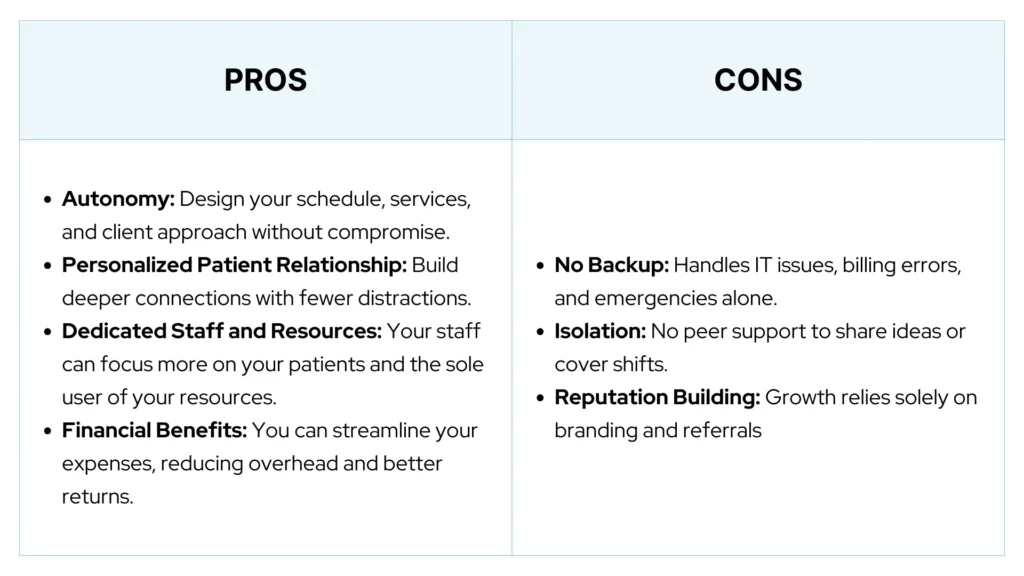
Solo healthcare professionals can leverage EMR software, like PxTrack, to reduce the pressure of managing everything alone. Even though covering shifts may be considered a challenge, many solo practitioners arrange coverage swaps with neighboring providers.
With a little bit of creativity, independent practice can be both manageable and rewarding. In fact, a smaller workload and closer patient relationships often lead to a more balanced and fulfilling career. It frees up your valuable time for better patient care.
Group Practice
Group practice generally refers to a collaborative model where multiple providers work together under a unified structure. These practices can range from small teams to large organizations with hundreds of providers.
Below are the benefits and drawbacks of healthcare group practices:
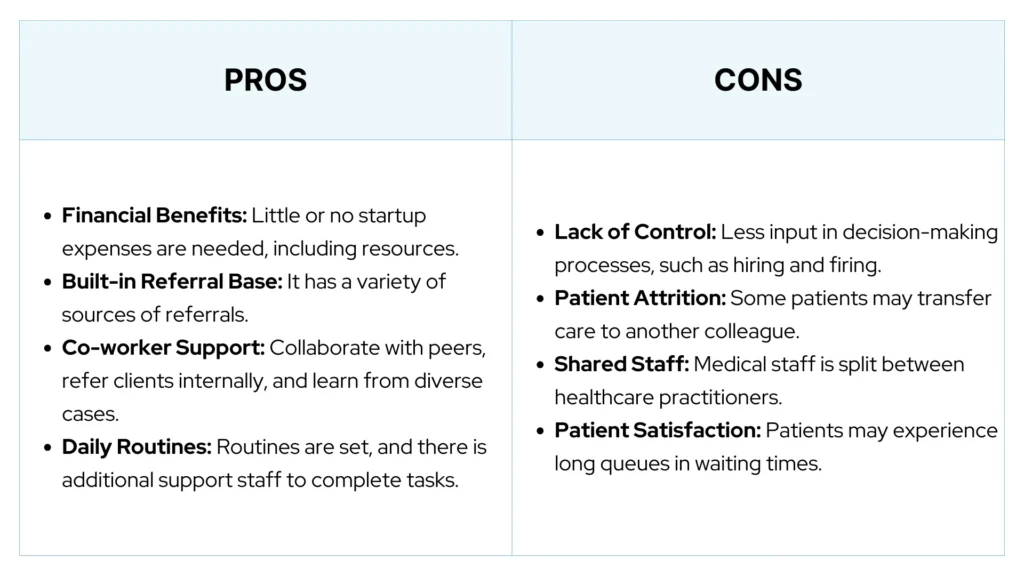
Smaller group practices offer a middle ground for doctors seeking autonomy while benefitting from shared resources. This includes the following:
- Support staff handle operations;
- Colleagues share call coverage, and
- Decision-making remains individualized.
In terms of employment terms, group practitioners prioritize clarity on scheduling and operational expectations to align with both employer needs and professional goals.
How to Find the Perfect Fit for Your Medical Career
These strategies will help you align your choice with your goals, values, and lifestyle.
Assess Your Autonomy vs Collaboration Preferences
Choose between thriving independence and valuing teamwork. Reflect on whether you want to build your vision alone or grow with a team.
Weigh Financial Implications
Solo practitioners can keep all the profits alone but you will also bear the total overhead costs and financial risks. Group practices offer financial stability and shared expenses. Consider if financial predictability and unlimited earning potential are critical to you.
Prioritize Work-Life Balance
Evaluate yourself if you can handle a solo workload or work with a team to delegate to. Going solo often juggles admin tasks, client care, and marketing, while group practices distribute responsibilities.
Evaluate Growth Opportunities
Group practices provide built-in networks for referrals, mentorship, and specialization, while solo practitioners proactively build reputation and client base. You can niche down independently or leverage a team’s infrastructure.
Test the Waters First
If unsure, consider dipping your toes in both. You can work part-time in a group practice to experience collaboration or start solo while renting shared office space to minimize risks. Testing the waters reveals what truly suits your workflow and personality.
Conclusion
Choosing between solo and group practice depends on your personal priorities. If you prefer financial stability, collaboration, and shared responsibilities, opt for group practice. But if you want flexibility, autonomy, and deep patient relationships, solo practice is an ideal option.
An added advantage is that you can leverage modern tools like the Electronic Medical Records (EMR) system to simplify your workflows and boost efficiency. This makes your practice more effective and manageable in terms of patient care.

FAQs
Can I switch from solo to group or vice versa later?
Yes. Some medical practitioners transition as their needs evolve. Start with what aligns with your current goals.
How does EMR software benefit both solo and group practices?
EMRs like PxTrack allow solo medical practitioners to automate administrative tasks while group practices ensure seamless data sharing among healthcare professionals for better coordination. Contact us to learn more.
Is EMR best for solo or group practice?
EMRs enhance both models, but it’s best recommended for solo practitioners for secured patient data sharing and privacy.